
UN humanitarians launched $674M appeal, calls for solidarity with Haiti

Anjali Sharma
GG News Bureau
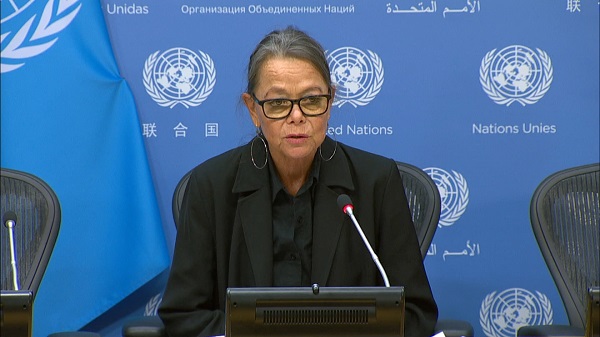
UNITED NATIONS, 29th Feb. UN Humanitarian Coordinator in Haiti Ulrika Richardson on Wednesday told reporters in a press conference in New York that the humanitarian agencies are hoping that donors will support a $674 million appeal plan for Haiti.
The country is facing armed gangs who continue to terrorize the population, Ms. Ulrika said.
Ulrika Richardson is in Port-au-Prince, a day after the Government and partners launched the plan to provide food, shelter, health, education and protection services for 3.6 million people this year.
“This is a call for increased solidarity, and Haiti needs it,” she said.
She noted that the country is “going through one of the most critical moments in its recent history.”
Ms. Richardson reported that last year saw “a very steep increase” in murders, lynchings, rape and other violence committed by gang members operating in the capital and Artibonite province.
This “very tragic trend” has continued into 2024, with January being the most violent month in two years, she added.
She echoed the report by the UN human rights office in Geneva.
Ms. Ulrika said sexual violence, including collective rape mainly affecting women and girls effectively rose 50 per cent over 2022 levels, and “too often the perpetrators go free,”.
She noted that the number of Haitians forced to flee their homes has risen, with some 314,000 now displaced.
People are sleeping on the streets, camping out in schools, or living in host communities, where resources are overstretched, she reported.
She reported that Haiti has a population of 11 million and humanitarians have assessed that 5.5 million require assistance.
Over 4 million are facing acute food insecurity, with increased numbers of malnutrition among children and pregnant women, she said.
Ms. Richardson said 45 percent of Haitians do not have access to clean drinking water.
She noted 3 million children are in need. Rampant violence is threatening their access to education, while students who rely on school feeding programmes are missing out on meals.
“At some point we had 1,000 schools not open during the month of January and that means a lot to children and a generation that has seen impacts on their schooling.”
She cited first the COVID lockdown followed by the collapse of security and services, she said.
The UN coordinator stressed that at home or in the streets, people in gang-affected areas are at risk. The gangs often control major roads in and out of the capital, thus hindering both Haitians and the humanitarians that serve them.
On how Haitians feel about the proposed Multinational Security Support Mission authorized by the UN Security Council to support the national police, she said “If you would ask people on the street if they need assistance to deal with the gang violence they will say yes”.
She described the suffering and pain in Haiti as “daunting” and “appalling”.
“I can say that what I’ve witnessed here and many with me, including Haitians it goes beyond even what you could have feared in your worst nightmare.”
UN and partners sought $720 million for their operations in Haiti and received 34 per cent of the funding.
She explained that this year’s “financial envelope” is lower, even though needs are greater, as humanitarians have tried to be more targeted in their approach, plus they have learned what works best and also have very good cooperation with local organizations.
“We really count on a very robust mobilization of the international community,” she said, expressing hope for the 2024 plan.
She stressed that humanitarian assistance is not the solution to the crisis in Haiti and called for parallel investment to address the root causes.
