

Anjali Sharma
GG News Bureau
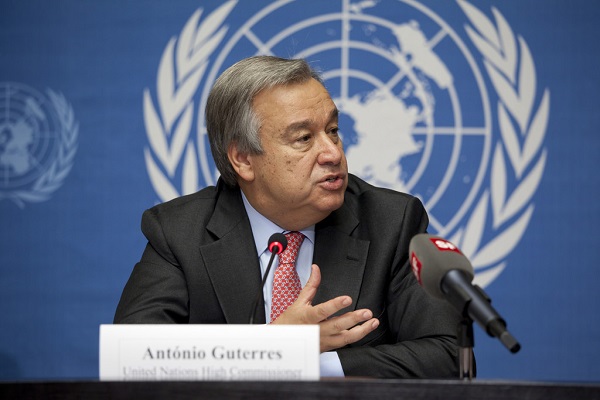
UNITED NATIONS, 27th Feb. UN chief Antonio Guterres on Monday expressed his concern over the deadlock on the disarmament as the UN Conference on Disarmament is consistently failing to deliver.
He stated geopolitical divides, arms competition, increasingly dangerous new technologies and an elevated nuclear risk.
The Conference was established with the primary goal to foster cooperation for mutual disarmament has faced significant challenges in recent times.
Guterres said “Something looks wrong if a disarmament conference leads to no meaningful disarmament, year after year”
“Humanity needs the Conference on Disarmament to work successfully. The paralysis and deadlock that have come to define it is something that is not acceptable,” he added.
Mr. Guterres recalled the Conference’s historic role in drafting key agreements such as the Treaty on the Non-Proliferation of Nuclear Weapons and the Comprehensive Nuclear-Test-Ban Treaty.
He said that “These victories for peace were hard-fought and hard-won.
SG stressed that they were not miracles but a result of countries working together in cooperation.
He noted that with global trust “falling apart” and geopolitical divides creating a “total deadlock”, the Conference must be urgently reformed.
Guterres highlighted the UN’s proposed New Agenda for Peace, which, among other priorities, places prevention and disarmament at the forefront of the global peace and security architecture.
He urged the Conference not to contribute to the prevailing cynicism around multilateral action but to actively engage in finding solutions that can propel humanity forward.
“Despite the current diplomatic deadlock, the central premise behind this Conference remains as vital as ever,” he said.
“The most effective disarmament tool is inclusive diplomacy. We need that diplomacy now urgently,” he added.
The Conference on Disarmament was established in 1979, is the world’s only multilateral forum for disarmament negotiations.
It has played a key role in shaping major arms limitation pacts such as the Non-Proliferation of Nuclear Weapons, the convention on prohibition and destruction of biological weapons, the convention on the prohibition and destruction of chemical weapons, and Comprehensive Nuclear-Test-Ban Treaty.
The conference has 65 member States, including 5 declared NPT States with nuclear capability (China, France, Russia, the United Kingdom, and the United States), the Conference also invites non-members to participate in its frame work.
