

GG News Bureau
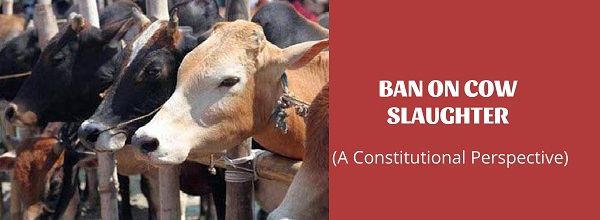
New Delhi, 22nd Feb. Two state-level decisions have been observed concurrently in Rajasthan and Madhya Pradesh. Since the BJP came to power in Rajasthan, where more than 600 cows were killed every day, cow cremation has become mandatory in that state, while in Madhya Pradesh, cow slaughter is no longer permitted in two small villages. These criminals have not only left the house, but it has also been stopped. The beef market in the Kishangarhbas area of the Khairthal Tijara district of Alwar actually had numerous evidence of open cow slaughter for a long time; hundreds of cows were killed there every day. However, the police remained quiet during the Congress regime of that time, acting as though everything you moved here was done so with his approval.
The law is mere a formality
There are legal provisions for cow slaughter and beef production across the nation. In Rajasthan, for example, the Rajasthan Bovine Animal Act of 1995 stipulates that violators may face up to 10 years in prison and a fine of Rs 10,000. In this regard, a significant amendment was also proposed in 2017 at the state level. Additionally, some similar laws have been passed nationally under the Prevention of Cruelty to Animals Act, 1960, which imposes a maximum 5-year prison sentence for abusing or killing animals. However, it is easy to understand the environment’s animosity toward Hindus given the savagery with which Hindu-associated animals were being slaughtered.
Criminal activity taking place in public
Considering how many people used to come here to purchase meat from neighboring areas and even other states, you can see how obvious this crime was. From here, home delivery services were also offered in roughly 50 Mewat, Haryana, villages. There were open sales of beef biryani in the area. Selling meat and skins was bringing in more than Rs 4 lakh a month for many.
The Supreme Court ruled that the slaughter of animals was totally prohibited
Those who advocate for cow slaughter actually frequently cite Gandhi and the 1958 Supreme Court ruling. During that period, a Supreme Court bench consisting of five judges had decided that cows of all ages, with the exception of calves, could be put to death if they are unable to give birth or maintain their weight. These cattle had been deemed “useless” by the court. However, the Supreme Court unanimously upheld a total ban on the slaughter of cattle in 2005, forty years after the practice began, regardless of the cattle’s value. Interesting about this ruling is that the Court used examples from Bharat’s history—Mahatma Gandhi, Vinoba, Mahavir, Buddha, Nanak, and other notable figures—to support its argument that the weaker party always has the upper hand. We shouldn’t kill the cow and instead make the most of its life because we need to protect and be compassionate.
Gandhi’s views on the protection of cows in “Hind Swaraj”
Mahatma Gandhi responded to a reader’s query regarding cow protection in his book “Hind Swaraj.” He claims, “I myself respect, admire and worship the cow.” Cows are beneficial animals in many aspects. Brothers who are Muslims will also accept this. But I worship people just as much as I worship cows. Humans are useful, just like cows. whether Hindu or Muslim. So, in order to protect the cow, will I fight Muslims? Shall I murder him? I will make enemies with cows and Muslims alike by doing this. Consequently, I would argue that the only way to save the cow is for me to work with my Muslim brother to persuade him to save the cow for the nation. I should let the cow die because I have no control over it if he doesn’t understand. I should give up my life if I have deep sympathy for the cow, but I shouldn’t take a Muslim’s life. I think this is the religious law.
Mahatma Gandhi occasionally supported cows
One may wonder if Gandhi felt the same way about cows. Without a doubt, the response is no. due to the fact that Mahatma Gandhi occasionally supported cows. Gandhi adds, “She (the cow) seems to be saying to us in her own language: God has made you our master, not so that you can murder us, eat our flesh, or mistreat us in any other way, but so that you will always be our friend and guardian.” Young India, June 26, 1924. Gandhiji thought that the stigma associated with cow slaughter ought to end, not just in Bharat but globally as well. He therefore desired that this work begin in Bharat. In his writing, he expresses his desire for the global recognition of the concept of cow protection. However, in order to achieve this, the cow dynasty’s misfortune in India must first be resolved, and it must be given its rightful place. – (Young India, 29-1-1925).
Gandhiji used to draw a link between Bharat’s economy and cow care
Mahatma Gandhi is thus frequently seen outspokenly supporting cows. Aside from “Hind Swaraj,” Gandhi’s life philosophy makes reference to his devotion to cows on numerous occasions, which is why he believed that cow care was crucial to Bharat’s economy. It is undoubtedly impossible to fully appreciate today the compassion with which the government of Rajasthan treated the cow or the sensible choice made by the Mohan government of Madhya Pradesh with regard to the cow’s final rites.
