

Anjali Sharma
GG News Bureau
UNITED NATIONS, 14th Feb. The acting representative of the WHO in Sudan Peter Graaff on Tuesday warned that the civilians to bear the suffering as the war between rival militaries in Sudan spreads into new areas, driving displacement, hunger and exposing communities to deadly diseases.
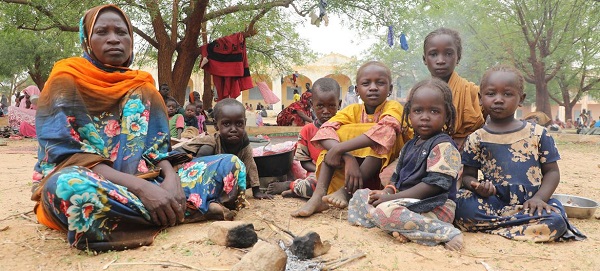
Peter Graaff warned that displaced people sheltering in overcrowded areas lack access to water and sanitation, food, and the most basic services.
“The situation in Sudan was a perfect storm as the health system is hardly functional. The childhood immunization programme is breaking down and infectious diseases are spreading,” he said.
He was speaking to reporters at the regular press briefing at the UN Office at Geneva from Cairo.
Mr. Graaff visited South Sudan, Chad and Kenya.
According to WHO over 10,000 cases of cholera, 5,000 cases of measles, about 8,000 cases of dengue and over 1.2 million clinical cases of malaria, have been reported in Sudan.
WHO noted that over 80 of the 503 health facilities operated by aid organizations either not or only partially functioning due to insecurity and lack of medical supplies or medical personnel.
UN humanitarians have warned that the upcoming lean season, which starts in May, could lead to catastrophic hunger.
WHO said that 3.5 million children are malnourished and over 700,000 suffer from severe acute malnourishment, required urgent support in Sudan.
“Hunger weakens the body’s defences, it opens the doors to disease and increases morbidity and mortality,” said Mr. Graaff.
“Disease and malnutrition have an unhealthy synergistic relation” he explained, noting that pregnant women and children are most at risk, including of death.
The war erupted last April between the Sudanese Armed Forces and the paramilitary Rapid Support Forces has left over 25 million people dependent on humanitarian assistance.
Some 7.8 million people have been driven from their homes across Sudan, including 1.6 million forced to flee across its borders.
The internally displaced persons are sheltering in 6,600 locations across all of the country’s 18 states, an increase of 112 locations compared to the week before.
UN agencies and aid partners have scaled up their response but face challenges, from insecurity, looting, bureaucratic impediments to communication blackouts.
They reported fuel shortages affect the movement of humanitarian staff and supplies, and the generation of power needed for maintaining cold chain storage and supplying water.
The response is constrained by lack of sufficient funding, WHO stated.
UN launched the Humanitarian Needs and Response Plan for Sudan, required $2.7 billion to provide lifesaving protection and assistance to 14.7 million people across Sudan in 2024.
According to the UN Office for the Coordination of Humanitarian Affairs as of 12 February 2024, the appeal is only 3.5 per cent funded with $94.5 million received.
“Despite all these challenges, humanitarian partners continue to provide life-saving assistance to the vulnerable people they can reach. The conflict – particularly in Khartoum, Darfur and Kordofan – has exacerbated an already dire humanitarian situation,” the OCHA noted.
