
Top official calls US to uphold judges’ right to speak freely on race, gender bias

Anjali Sharma
GG News Bureau
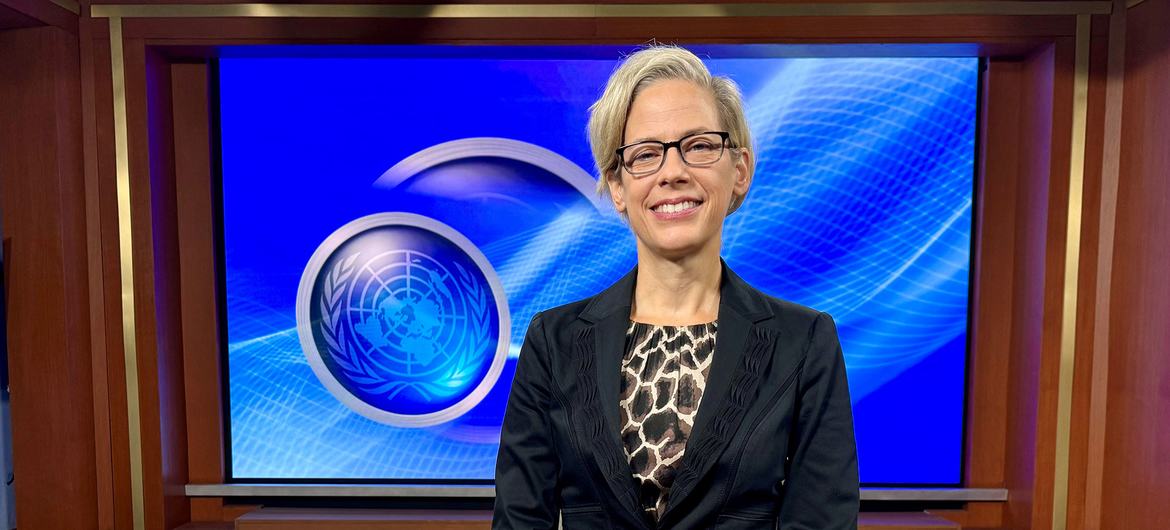
UNITED NATIONS, 6th Feb.UN Special Rapporteur Margaret Satterthwaite on Monday said that the US Judges must be free to speak about important issues that threaten judicial independence or affect the administration of justice.
Margaret Satterthwaite voiced serious concerns that a Supreme Court Justice in the state of North Carolina, Anita Earls, was investigated for comments made regarding the potential role that implicit biases based on race, gender, and political affiliation can play in the Court’s decision-making.
She said “Like other citizens, judges are entitled to freedom of expression, provided they conduct themselves in a way that preserves the dignity of their office, and the impartiality and independence of the judiciary.”
“Judges should not face disciplinary investigations for speaking out on issues of vital public interest in a democratic society.”
Justice Earls is the only African American woman justice, and one of two Democrats, on North Carolina’s highest court, the OHCHR noted
It saifd in a press release that she was investigated by the state’s Judicial Standards Commission following a June 2023 interview in which she expressed opinions about the lack of racial and gender diversity among advocates arguing before the court, the lack of racial diversity among judges’ clerks, and the impact of implicit bias on the justices’ treatment of advocates who are women and/or people of colour.
Justice Erls described being interrupted and received different treatment from her colleagues on the bench during public oral arguments, said that this might be on account of her race, gender or political views, Margaret Satterthwaite stated.
She discussed the decision to discontinue programmes aimed at increasing equity and tackling implicit bias within the North Carolina judicial system.
The Commission’s investigation into Justice Earls alleged that a judge should not publicly allege that a colleague is making decisions based on an improper motivation “without some quantum of definitive proof.”
Ms. Satterthwaite said she has seen evidence that other North Carolina Supreme Court justices have publicly accused their colleagues of partisan conduct but were not investigated by the Commission.
“By singling out the speech of the only African American woman on North Carolina’s Supreme Court, the Commission’s actions raise the question of discrimination on the basis of race and gender,” she said.
Margaret Satterthwaite expressed concern that the Commission’s treatment may constitute reprisal for Justice Earls’ efforts to call attention to pressing issues of racial and gender discrimination.
She warned that this could have a chilling effect that inhibits others in the judiciary from sounding the alarm about issues of racial and gender bias.
UN official added that combatting discrimination must be a priority for all actors in the justice system.
“To effectively play its role in defending equality for all under the rule of law, the judiciary should be diverse and representative,” she said.
“By raising concerns about representation and bias in judicial systems, judges can help translate principles of equality before the law into reality. The right to make comments like these should be defended, and even encouraged.”
Margaret Satterthwaite is the UN Special Rapporteur on the independence of judges and lawyers and the Council’s independent fact-finding and monitoring mechanisms that address specific country situations or thematic issues in all parts of the world.
These rights experts work on a voluntary basis and are independent of any government or organization.
