
DRDO takes a big leap in space defence technology, develops green propulsion system
Successfully demonstrated its functionality in space orbit on launch payload

GG News Bureau
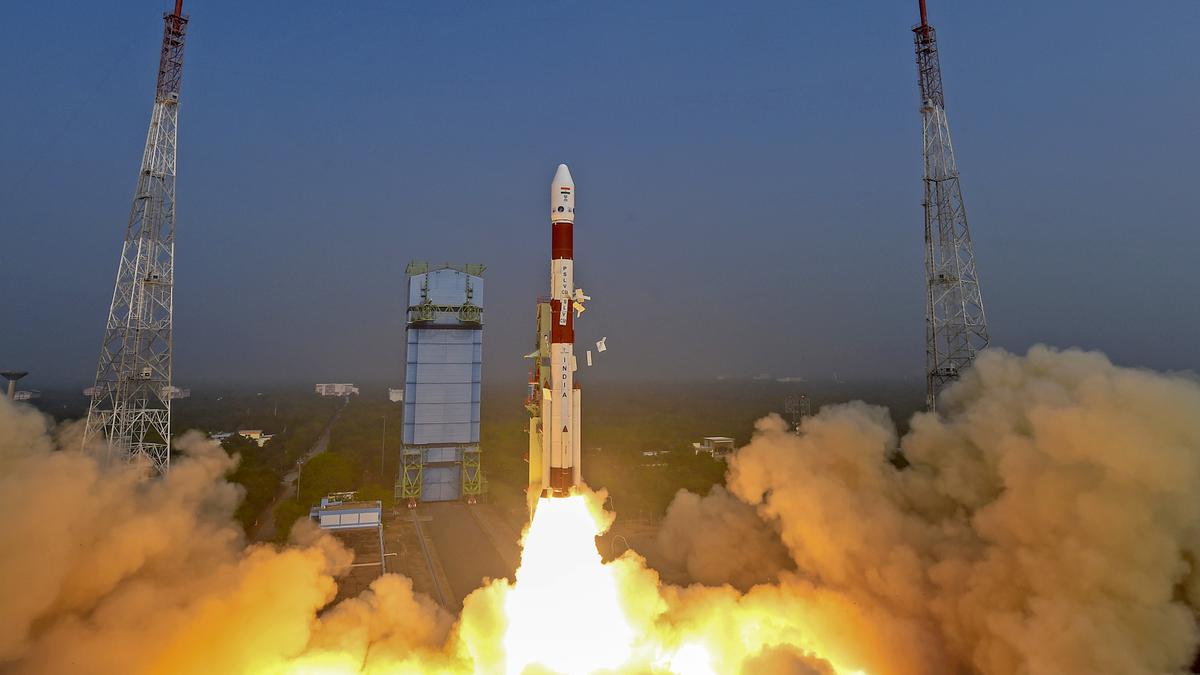
New Delhi, 3rd Feb. DRDO has taken a huge leap in space defense technology by developing green propulsion systems under the Technology Development Fund (TDF) scheme. The system has successfully demonstrated its functionality in space orbit on payloads launched in the PSLV C-58 mission. The 1N class green monopropellant thruster project was approved for altitude control and orbiting of micro satellites.
https://x.com/ANI/status/1752980462983909615?s=20
The Technology Development Fund (TDF) was created as part of the “Made in India” initiative to encourage defense industry self-sufficiency. It is a Ministry of Defense program.
The Defense Research & Development Organization (DRDO) is carrying out this program in order to satisfy the demands of the Tri-Services, Defense Production, and DRDO.
The program promotes public and private industry participation, with a focus on MSMEs and startups, in order to establish an ecosystem for advancing cutting edge technological capabilities in the defense industry.
It has been developed by Bengaluru-based startup Bellatrix Aerospace Pvt Ltd (development agency). ISRO Telemetry, Tracking and Command Network (ISTRAC), also based in Bengaluru, has validated the telemetry data from the PSLV Orbital Experimental Module (POEM) with ground level resolution. It has been found to be better than expected across all performance parameters. This new technology has resulted in a non-toxic and eco-friendly propulsion system for low orbit space. The system comprises indigenously developed propellant, fill and drain valves, latch valves, solenoid valves and catalyst bed, drive electronics, etc. This system has been found to be ideal for space missions with high thrust requirements.
It has been developed by the development agency under the guidance of DRDO’s Project Monitoring and Mentoring Group. It has demonstrated steady state firing, deactivation of residual propellant in outer space, propellant recovery under TDF and establishment of filling process. According to DRDO, India Technology Development Fund Scheme is supporting deep tech innovations in the space sector to promote self-reliant initiatives in defence. The technology developed is environmentally safe, which will reduce the cost of satellites and will be a key technology to enhance Indian space capabilities. Technically trained Bellatrix Aerospace has developed India’s first high performance green propulsion system for small satellites, which has been successfully tested in orbit on the POEM module of PSLV C-58 mission. This technology has been developed with the support of DRDO TDF.
What are green propellants?
Next-generation launch vehicles and spacecraft are among the many applications where green propulsion systems offer an alternative to traditional chemical propulsion systems that employ hydrazine propellants. Because green propellants are denser and have a higher specific impulse (Isp), they perform 50% better than traditional hydrazine propulsion systems. It also requires less power from the spacecraft to keep its temperature stable because of its lower freezing point. Because green propellants are simpler to work with, they require less fuel to operate and integrate.
In order to lessen the impact of transportation on the environment, green propulsion technology powers cars and ships using renewable or zero-emission energy sources. It is a creative and crucial method of lowering our reliance on fossil fuels and has the ability to completely change the way we use the carrier. Green propulsion technology offers a more efficient and environmentally friendly method of operating cars and ships, and it is already in use in many different industries.
It is a fascinating advancement in modern transportation that may have a big impact on it in the future. Green propulsion technology blends propulsion with environmentally friendly energy sources like solar, wind, and nuclear power with more cutting-edge innovations like electric and ion propulsion.
