

GG News Bureau
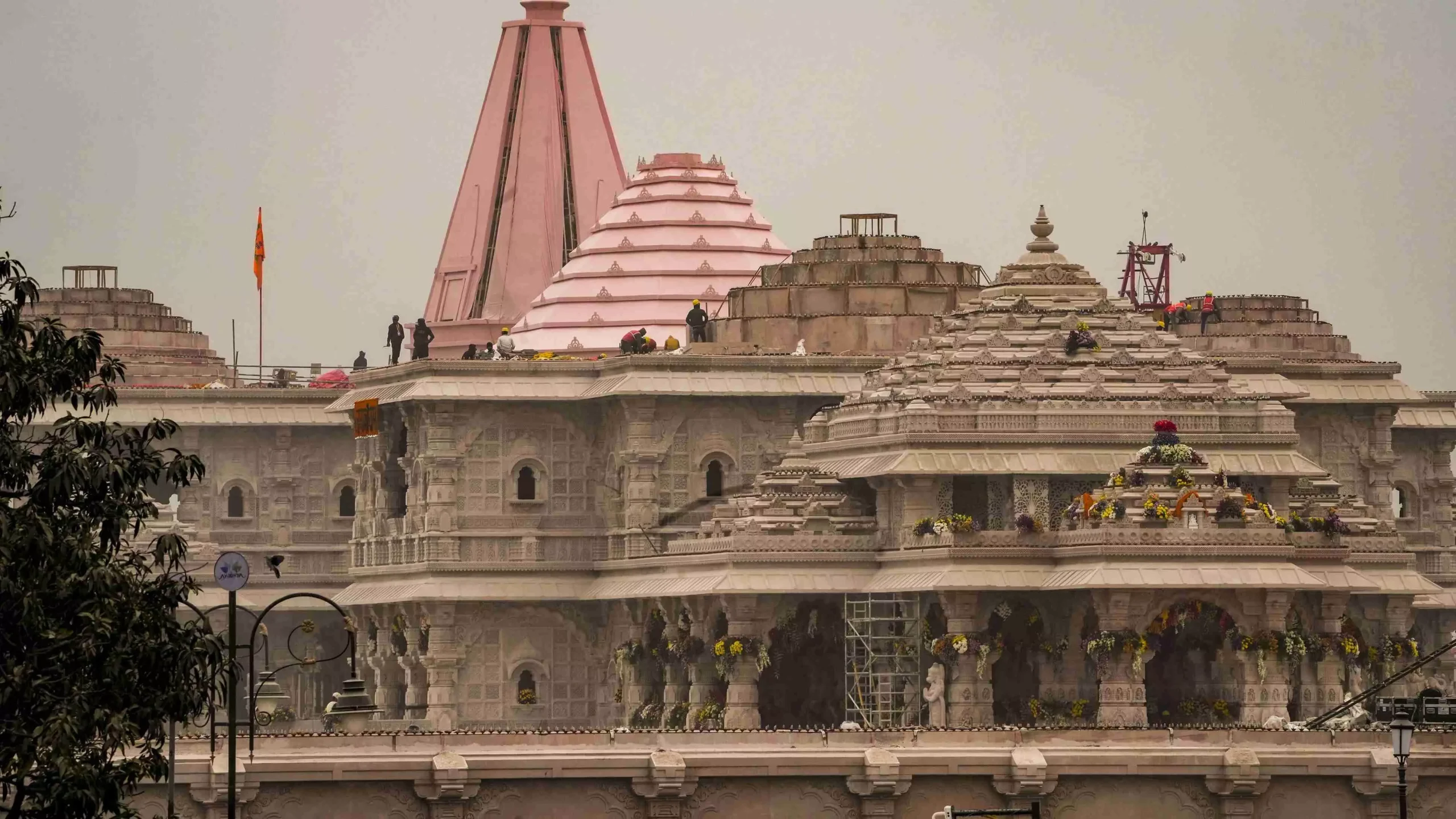
New Delhi, 30th Jan. Pakistan seemed to be extremely upset over the inauguration of the Ram mandir in Ayodhya. The fact that the UN has discussed the matter of the Babri Masjid’s demolition and the construction of the Ram mandir is a clear indication of Pakistan’s resentment. According to the letter, Pakistan says that the Gyanvapi Mosque in Gyanvapi and Shahi Idgah in Mathura are under intimidation. Pakistan brought up the mandir issue at the UN during the most recent OIC meeting, which took place in New York, America. Pakistan had previously said that it disagreed with the mandir’s consecration. The Organization of Islamic Corporation (OIC), which is composed of 57 Muslim nations, has also voiced “concern” on the Ram mandir’s creation.
Letter to UN from Pakistani Ambassador Munir Akram
The letter was written by Munir Akram, Pakistan’s ambassador to the UN. The UN has been consulted on the subject of the Babri Masjid’s demolition and the construction of the Ram mandir. Pakistan has claimed in the letter that Shahi Idgah in Mathura and the Gyanvapi Mosque in Gyanvapi are “facing similar threats.” Referencing the Archaeological Survey of India (ASI) findings, the Hindu side’s attorney stated that the Gyanvapi Mosque was constructed on the foundation of an ancient mandir.
In a letter to UN official Miguel Angel Moratinos, Akram has ‘condemned the construction and consecration’ of the Ram temple. In the letter shared during the OIC meeting, he has alleged, ‘This trend poses a threat to peace and harmony in the region as well as to the political, economic, social welfare of Indian Muslims.’ The letter further said. ‘I am writing this letter to you for your immediate intervention for the security of religious places in Bharat. The United Nations Alliance of Civilizations should play an important role in saving the Islamic heritage and protecting the religious and cultural minorities in Bharat.
OIC brought up concerns
OIC released a formal statement recently. It said, ‘The General Secretariat of the Organization of Islamic Cooperation expresses serious concern over the recent construction and inauguration of the Ram Temple in the Indian city of Ayodhya, at the site where the Babri Masjid was earlier demolished.’ In line with the position expressed by the Council of Foreign Ministers at previous sessions, the Secretariat condemns actions that aim to destroy the Islamic monuments represented by the Babri Masjid.’
Pakistan is enraged
According to Pakistan’s Foreign Office, the Pran Pratistha ceremony is an indication of Bharat’s developing majoritarianism in light of the events of the past 31 years. This action is a part of an attempt to socially, economically, and politically isolate the Bharatiya Muslims. ‘The burgeoning ideology of ‘Hindutva’ in Bharat is a severe threat to religious unity and regional peace,’ this claims.
What is the Gyanvapi report about?
According to Vishnu Shankar Jain, the lawyer for the Hindu side, the ASI assessment suggested that the Gyanvapi Mosque was constructed on the site of an old mandir. Jain further asserted that there was enough proof in the survey report to support the presence of the mandir, on which the mosque was constructed. Remaining of idols of Hindu deities were discovered in two basements, he said during the inspection. According to Jain, the court provided copies of the 839-page ASI survey report to the relevant parties. He added that it was evident from the reports that the mosque beside the Kashi Vishwanath temple was constructed on the site of a large Hindu mandir that had been destroyed in the seventeenth century during Aurangzeb’s reign.
